南宁二模时我写了一篇文章分析出题人设置题目的背后逻辑
南宁二模:出题人的暗示你不看,难怪阅读拿不到满分
- 并列递进类:逗号、and、also、besides、what's more
- 相反/对比类:unlike、rather than、instead of、be different from
|
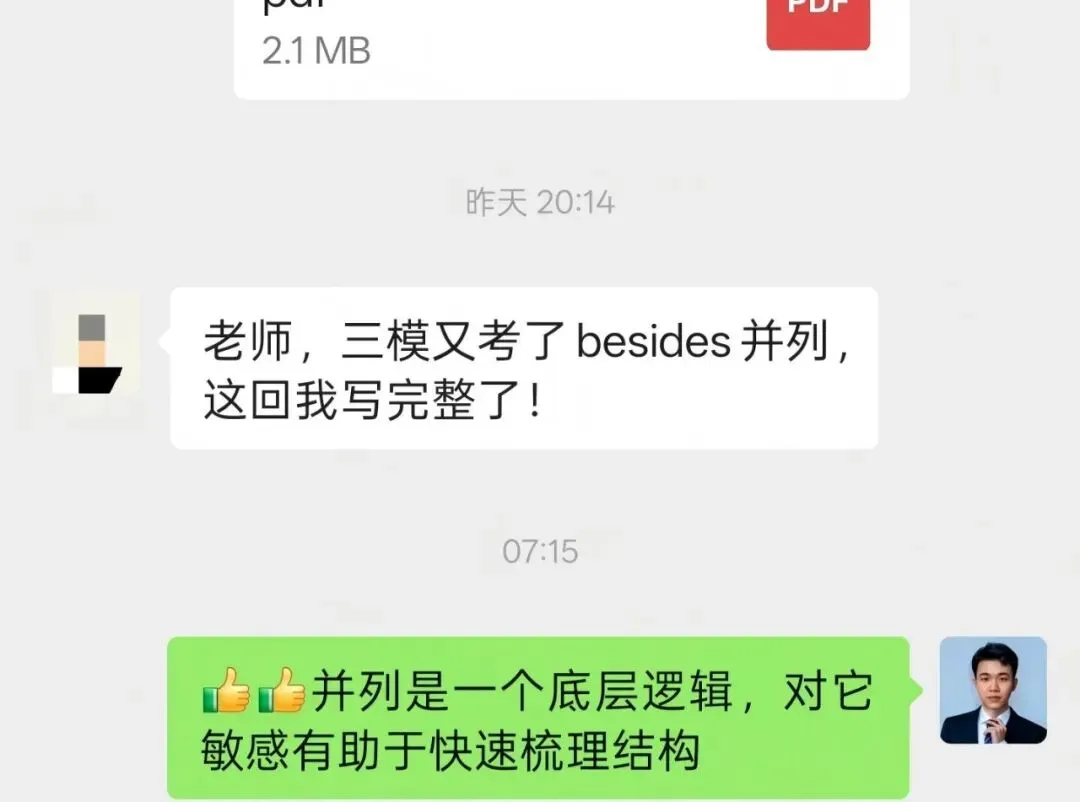
抓逻辑词解题,能让同学解题有章法,大幅降低出错概率到了三模,马上有二中的学生给我反馈用上了这个逻辑
今天继续拆解南宁二中、三中、十四中的三模中体现的考点。
一、并列:抓分层,杜绝漏点
递进词的核心作用:文章在加信息、加要点、分层说明。答案往往不止一点,语感做题容易只看前半句,逻辑做题能抓全所有得分点。
|
To make its products more popular, He Mei’s company has developed complete DIY tool bags, so people can create a figurine of their own within an hour. Besides, her company has even worked with robot companies. |
| 题目: What has He Mei’s company done to make its products more popular? |
很多同学扣分,就是因为只翻译、不看逻辑,只写第一点,漏掉Besides带出的第二点。
看到Besides直接判定——前后是两个并列措施,答题必须两点齐全。
Besides它明确告诉你,除了前文提到的“开发DIY工具包”之外,还有进一步的行动。顺着 Besides往后看,会有第二层答案。将这两点通过 and并列提取出来,即可精准作答,绝不遗漏:It developed DIY tool bags and worked with robot companies.
|
What makes “three” so magical? First,the human brain loves to find patterns— things that happen again and again in a regular way. How many times does something at least need to happen before our brain says, “This is really a pattern”? The answer is three. Once can be seen as luck. Twice might still be coincidence (巧合). But when it happens three times, we believe it is a real pattern.Second, our brains can only remember limited (有限的) information at a time. Audience (听众) usually only remember three things from a speech. Do you want something in your speech to stick in your audience’s minds? Present it in groups of three. |
|
58 What makes “three” so magical according to the text? A. Its wide use in everyday life. B. Its special meanings in different cultures. C. The brain’s thinking habit and limited memory. |
文章用标准递进分层逻辑:First / Second
First:人脑喜欢寻找规律(思维习惯)
Second:人脑单次记忆有限(记忆特点)
逻辑解题思路:First、Second是典型并列递进结构,说明答案由两个因素共同构成。
因为你知道 First 和Second 之间只能一直都在说一个点原文下划线线的部分都不需要再读,他们只是这两个因素的解释说明。二、相反对比:抓反差,做区分
instead of、unlike 本质都是「正反对比、两两区分」。
哪怕句子看不懂、生词不认识,只要看到对比词,
就知道:前后是两个完全相反、不同、取舍关系的内容。
|
...Instead of sitting and blaming like others, Wang Ping quickly went to help the man. Seeing this, more drivers followed him. Together, they pushed the car, and soon it started again with a loud noise. The young man smiled in relief(解脱). He thanked the people who helped him and said sorry to everyone before driving away.... |
53.What does “this” in Paragraph 3 refer to? A. Wang Ping quickly went to help the man. B. The car made a loud noise when it restarted. C. Other drivers blamed him and refused to help. |
54. According to the passage, what is Wang Ping like? A. Quiet and patient. B. Shy and honest. C. Kind and helpful. |
55. What is the best title of the passage? A. Keep Calm, Stay Patient B. Stop Blaming, Start Helping C. Learn to Drive, Learn to Wait |
核心逻辑词:instead of
大众做法:sitting and blaming(旁观、指责)
王平做法:went to help the man(主动帮忙)
53题:通过正反对比,得出this指出王平助人行为
54题:通过正反对比,直接看出王平善良、乐于助人
55题:文末再次复现 instead of blaming、offer help,全文核心对比就是「停止指责,主动帮忙」
三、解题心法
- 递进词(besides/first/second/and):用来找全要点、排除片面选项、解决简答漏分;
- 对比词(instead of/unlike):用来找差异、判态度、定主旨、辨人物;
- 摒弃语感做题:简单题语感能蒙对,考试一旦升级:句子变长、生词变多、句式变复杂,你语感会直接失效。
养成抓逻辑词的习惯,不管题目难度如何波动,你的正确率都会稳定在线。
我是覃老师,关注我,每期分享一个关于英语教学及学生教育的思考,总有一个能帮到你。如果有什么疑问,可以加我微信(QXYY580)沟通。
 10个月宝宝每天需要喝多少奶粉?

